SPA and Wellness Centre Certification in Bulgaria (2026)
How to certify medical SPA, SPA, wellness, and thalassotherapy centres in Bulgaria: facility rules, staff, inspections, 2026 fees, and renewal.
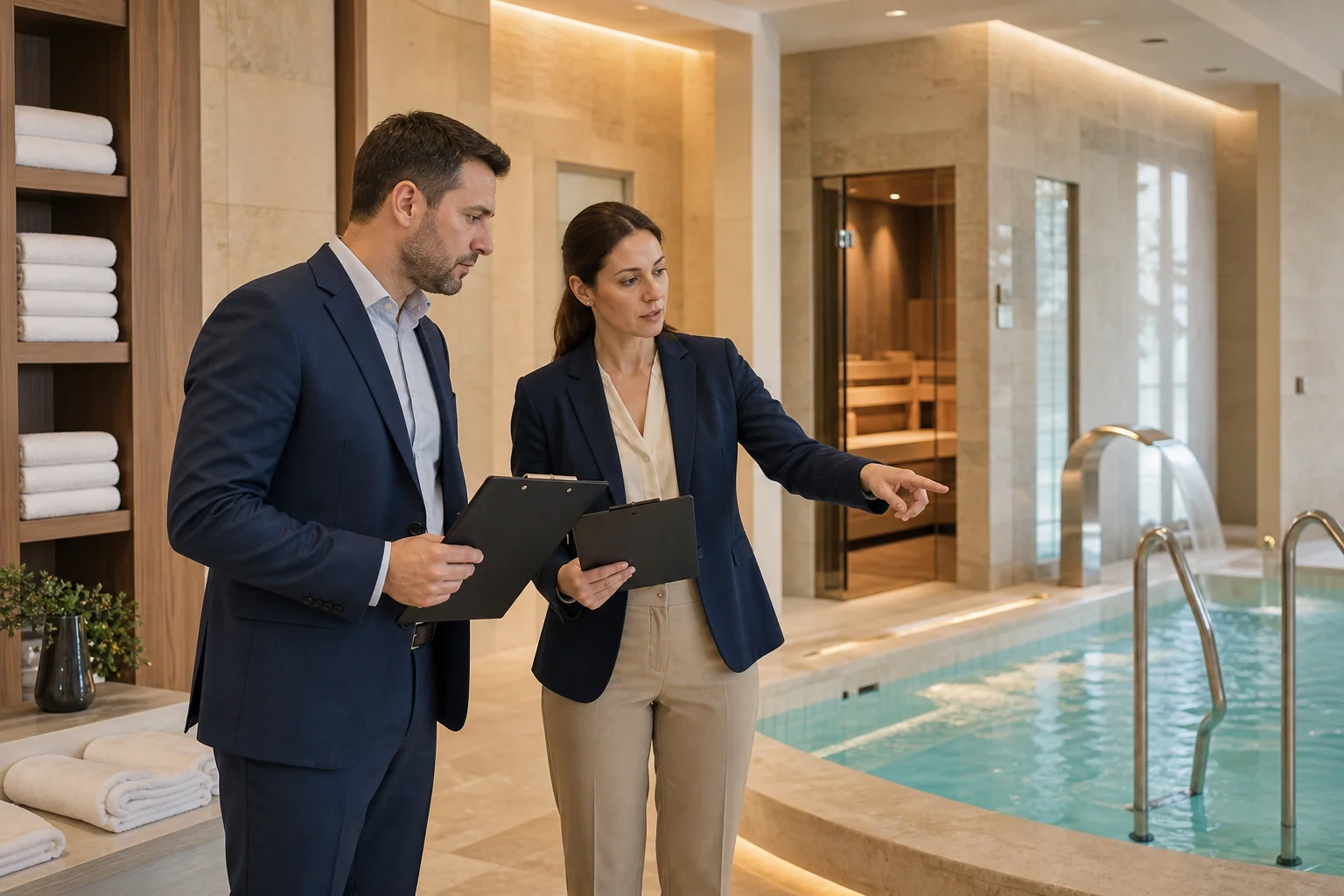
A Bulgarian spa or wellness concept is not simply a hospitality brand. The Tourism Act protects the descriptions “SPA”, “medical SPA”, “wellness”, and “thalassotherapy” when they are used for a centre or for a bundled service offering. A business that wants to use one of those descriptions—in its name, website, brochures, or other advertising—needs the corresponding certificate for the actual premises.
Certification is a design, staffing, health, and operating project. Choose the centre type before fit-out because its rooms, equipment, personnel, and underlying registrations differ substantially.
This guide provides general information as at 1 August 2026. It is not legal, medical, architectural, water-use, health-and-safety, or engineering advice for a particular facility.
Certification at a Glance
| Question | Position in 2026 |
|---|---|
| Certifying authority | Minister of Tourism or an authorised official, following the expert commission's proposal |
| Certificate types | Medical SPA, SPA, wellness, and thalassotherapy; there are no star classes or graded levels |
| Main rules | Tourism Act and joint Ministry of Tourism/Ministry of Health Ordinance No. 04-14 of 9 October 2019 |
| Site inspection | Ministry of Tourism and the competent Regional Health Inspectorate (RHI) participate |
| Initial document review | Ten days; defects normally receive a ten-day correction period |
| Open-procedure document | Temporary certificate valid for three months, subject to a limited seasonal extension |
| Final validity | Five years from issue; renewal must be requested before expiry |
| 2026 state fees | Two stages, totalling EUR 511.29–664.68 depending on the centre type |
| Changes | Relevant registered changes requiring a new certificate must be filed within 14 days |
When Is a Certificate Required?
Chapter Nine of the official Tourism Act governs stand-alone centres and those attached to accommodation in urban or resort environments. The rule covers centre names and bundled balneotherapy or spa/wellness services advertised online or in print. Calling an unverified room a “spa zone” does not avoid it.
Ordinance No. 04-14 expressly excludes stand-alone hairdressing, barber and beauty salons, saunas, and solariums. A beauty studio offering its ordinary services is not automatically a wellness centre. The position changes when the operator assembles and promotes a regulated centre with the relevant thermal, water, fitness, relaxation, cosmetic, or therapeutic offering.
The certificate covers the named operator and stated premises. It is not a nationwide licence transferable between locations.
The Four Centre Types—Not Four Quality Classes
| Type | Core distinction |
|---|---|
| Medical SPA | A medical establishment providing diagnostic, treatment, rehabilitation, and prevention programmes based on mineral water and/or therapeutic mud |
| SPA | A non-medical or mixed relaxation and body-care centre using water or other permitted natural factors, with the full mandatory water, thermal, contrast, relaxation, treatment, fitness, and service areas |
| Wellness | A recreation, beauty, anti-stress, and holistic-wellbeing centre; natural factors and a pool are not compulsory, but the prescribed thermal, contrast, treatment, fitness, and support areas are |
| Thalassotherapy | A medical establishment near the sea using seawater, marine-derived products, and/or lagoon mud in therapeutic programmes |
This choice is functional. It is not possible to apply for a “lower class” spa with fewer rooms. If the business cannot meet the SPA appendix, it must redesign the project or adopt a genuinely different, lawful service model rather than use the protected description.
Certification Is Separate from Hotel Categorisation and Medical Licensing
A hotel still needs its own accommodation category. Certification of the adjacent centre does not grant stars to the hotel, and a hotel category does not certify its spa. The Tourism Act's functional descriptions—“SPA hotel”, “wellness hotel”, “balneo hotel”, and “thalassotherapy hotel”—depend on an appropriately certified adjacent centre. When hotel categorisation and centre certification procedures are opened together, the Act allows both on-site checks to be carried out during one visit.
Medical SPA and thalassotherapy have a further layer. Under the current certification ordinance, they must be created by an eligible medical establishment practising physical and rehabilitation medicine. A tourism certificate does not replace the medical establishment's registration or authorisation, medical standards, or professional rules. Conversely, a medical registration does not itself confer the protected Tourism Act designation.
SPA and wellness centres must be entered in the RHI public register of sites of public use. The Ministry of Health's Ordinance No. 9 register procedure is a separate prerequisite. A water-abstraction permit is also required where a centre draws mineral or other water from a specific abstraction facility. Pool hygiene, construction, fire safety, accessibility, consumer, employment, and data-protection rules continue to apply in parallel.
Premises and Equipment: Design to the Correct Appendix
The 2019 ordinance contains a separate detailed checklist for each type. A SPA centre generally needs an indoor pool, water section, dry and wet high-temperature sections, a contrast-procedure room, relaxation zone, treatment cabins, fitness area, reception, product store, changing rooms, showers, and accessible sanitary facilities. For an attached SPA centre at a seasonal seaside hotel, an outdoor pool can satisfy the specific pool rule.
The SPA appendix calls for three separate treatment or massage rooms, one massage table per room, a cosmetic studio, wet-cleanable equipment, safety information, and temperature- and humidity-controlled product storage. The pool needs marked depths, safe access, anti-slip surroundings, nearby sanitary facilities, and the applicable health controls.
A wellness centre has no mandatory pool or water section, but it still needs at least one permitted dry-heat installation, one wet-heat installation, a contrast facility, relaxation space, two massage rooms, a cosmetic studio, cardio fitness, reception, storage, and sanitary areas. Medical SPA and thalassotherapy centres follow medical-establishment and rehabilitation standards in addition to their own water-treatment, thermal, contrast, pool, relaxation, and information requirements.
Do not sign a lease based only on floor area. Lawful use, occupancy status, ventilation, drainage, electrical capacity, fire measures, accessible toilets, clean/dirty workflows, humidity control, and pool engineering can determine whether the concept is certifiable.
Manager and Staff Requirements
The staffing matrix covers education, professional qualification, experience, and language skills. A SPA manager needs higher education in a listed health, tourism, or sport field, one foreign-language qualification, and at least three years' relevant health- or beauty-service experience. The team includes an eligible health professional, qualified thermal-procedure, massage, beauty, and fitness staff, a lifeguard, and a tourism-qualified receptionist as applicable.
The wellness manager route permits a broader group of higher-education fields, but retains the foreign-language and three-year experience tests. The specialist team remains prescribed. Medical SPA and thalassotherapy activity must be led by a doctor holding the recognised specialty in physical and rehabilitation medicine, with the medical and non-medical professionals required by the applicable medical standard.
Collect diplomas, vocational certificates, proof of experience, lifeguard credentials, and language evidence before filing. A job title in an employment contract does not cure an unsuitable qualification. Once personnel are hired, the operator also has separate employer obligations; see our guide to occupational health services in Bulgaria.
Application Documents and Readiness File
The operator must be a trader or another legal person entitled to conduct business and must not be in insolvency or liquidation. A new investor can begin with our Bulgarian company-registration guide, but incorporation alone does not authorise the centre.
The Ministry's current application-declaration identifies and declares:
- the operator and centre names in Bulgarian and Latin characters, contacts, address, UIC or equivalent registration basis
- the operator's legal right to use the premises and the identifying details of that title
- the manager's education, qualification, language competence, and experience
- the personnel's professional and language qualifications
- compliance of the rooms, furniture, equipment, and operating conditions with the selected centre type
- the occupancy permit or commissioning document details where required
A non-registrable premises-use document is attached, as is an express power of attorney where an agent files. Although much is declared or checked during inspection, keep occupancy and staff evidence, room and equipment schedules, RHI or medical status, relevant water rights and analyses, pool and safety records, service and price lists, emergency plans, hygiene routines, and storage controls ready.
Applications may be filed on paper, by licensed post, through secure electronic delivery, or electronically with a qualified signature. Use the form linked on the Ministry's administrative-service page, not an archived template.
Procedure, Inspection, and Timing
The statutory sequence is:
- Ministry officials review the application and attachments within ten days.
- If they find irregularities, they notify the applicant and give ten days from receipt to correct them. Failure can lead to refusal.
- A compliant file leads to opening the procedure and issuing a temporary certificate valid for three months.
- During that period, a commission including Ministry of Tourism and local RHI representatives inspects the centre against the selected appendix.
- The inspection protocol goes to the Expert Commission for Categorisation and Certification of Tourist Sites. After its meeting, it has seven days to issue its reasoned position.
- The Minister or authorised official then has seven days, based on that position, to certify and enter the centre in the National Tourism Register or refuse.
The three-month document defines the inspection window; it is not a promised final-decision date. A seasonal centre can receive a one-off, case-specific extension where delay was not attributable to the operator.
Inspectors verify the real premises, equipment, hygiene, services, records, and staffing. A brochure or architect's drawing cannot compensate for a missing room, unqualified employee, inaccessible sanitary provision, unsafe pool edge, or unworkable storage arrangement.
State Fees in 2026
The official fee tariff, updated by Council of Ministers Decree No. 190/2025, splits payment into document review at filing and NTR entry plus the certificate and plate after approval.
| Centre type | Document review | NTR, certificate, and plate | Total |
|---|---|---|---|
| Medical SPA | EUR 204.52 | EUR 460.16 | EUR 664.68 |
| SPA | EUR 178.95 | EUR 434.60 | EUR 613.55 |
| Wellness | EUR 153.39 | EUR 409.03 | EUR 562.42 |
| Thalassotherapy | EUR 127.82 | EUR 383.47 | EUR 511.29 |
The current Tourism Act fee tariff also sets EUR 25.56 for a registered change requiring an updated certificate and EUR 15.34 where no new certificate is required. Design, water analysis, engineering, medical, fire, health, training, and remedial-inspection costs are separate from these state charges.
Validity, Renewal, and Ongoing Duties
The final certificate lasts five years and the certificate and plate must be displayed prominently. The centre and service provider appear in the public National Tourism Register.
Renewal is allowed only before expiry. The current 2019 ordinance does not repeat the repealed 2016 ordinance's specific three-month renewal filing rule, so operators should not quote that old deadline as current law. Begin the audit well in advance and confirm the live Ministry form and timetable; expiry leads to removal and a fresh certification procedure.
During the certificate term, the operator should:
- continuously maintain the required rooms, equipment, hygiene, staff, service scope, foreign-language coverage, and underlying RHI or medical status
- keep the price list, service information, safety directions, water information and contraindications visible where the appendix requires them
- display the certificate and plate and ensure advertising matches the certified type
- notify changes requiring a new certificate within 14 days and pay the relevant register fee
- retain water permissions, analyses, pool controls, staff evidence, emergency plans, data safeguards, and documented internal responsibilities
- apply for renewal before the five-year end date
Systematic failures, expiry, insolvency or liquidation, a change of centre type, or missing the change-notification deadline can lead to deletion and invalidation of the certificate. Operating an uncertified centre also attracts a property sanction under the Tourism Act, with a higher range for repeat infringement.
Common Failure Points and Pre-Filing Checklist
Typical problems are selecting a cheaper-sounding type that does not match the service model, advertising “SPA” before the premises are covered, confusing a hotel's stars with centre certification, treating medical claims as ordinary wellness, relying on generic staff CVs without qualification evidence, and discovering too late that the plan lacks a mandatory room or accessible toilet.
Before filing, confirm that:
- the protected name, offered services, and selected statutory type match
- the legal entity, premises title, occupancy use, and building installations support the project
- RHI registration or medical-establishment status is in place for the correct route
- water abstraction, analysis, pool, hygiene, accessibility, and safety issues are resolved
- every mandatory section, room, equipment item, staff function, and credential is evidenced
- the application, NTR data, service catalogue, website, and on-site reality tell the same story
- the opening and marketing schedule allows for corrections and inspection
Lion Consult can coordinate the corporate, premises, certification, and regulatory workstreams with the operator's medical, architectural, pool, and health specialists. Contact our team before signing a fit-out contract or publishing a protected centre description.
Last reviewed: 1 August 2026. This article is informational and does not replace advice based on the proposed centre type, premises, equipment, water source, medical status, staff, services, and advertising.
Frequently Asked Questions
Do I need certification to advertise a SPA or wellness centre in Bulgaria?
Yes. The Tourism Act reserves the protected centre and bundled-service descriptions for operators working in premises covered by the corresponding certificate, including online and print advertising.
What types or classes of certificate exist?
There are four types—medical SPA, SPA, wellness, and thalassotherapy—but no star classes or graded quality levels. The service model determines the correct type.
Does a hotel's category cover its SPA?
No. Accommodation categorisation and centre certification are separate. A hotel may use a SPA, wellness, balneo, or thalassotherapy hotel description only with the corresponding certified adjacent centre.
Does medical SPA certification replace medical licensing?
No. Medical SPA and thalassotherapy centres must also be eligible medical establishments practising physical and rehabilitation medicine. The Tourism Act certificate is an additional requirement.
How long does the process take?
The Ministry reviews the file within ten days and normally gives ten days to cure defects. A compliant file receives a three-month open-procedure document during which the Ministry and RHI inspection occurs; later seven-day stages follow the expert meeting, so there is no single guaranteed completion date.
What are the 2026 state fees?
Total two-stage charges are EUR 664.68 for medical SPA, EUR 613.55 for SPA, EUR 562.42 for wellness, and EUR 511.29 for thalassotherapy.
How long is the certificate valid?
The certificate is valid for five years. Renewal must be requested before expiry, and registered changes requiring a new certificate must be notified within 14 days.